Oksana Korol

Case study · Minxli

Online-to-Offline Healthcare Platform

Minxli is a healthcare ecosystem that lets doctors treat patients both in the clinic and online — with minimal time and capital. As the sole product designer, I designed the entire digital family: website, mobile booking, admin panels, and a self check-in tablet app — all live before the first clinic opened its doors.

UX DesignHealthcareUser ResearchDesign System
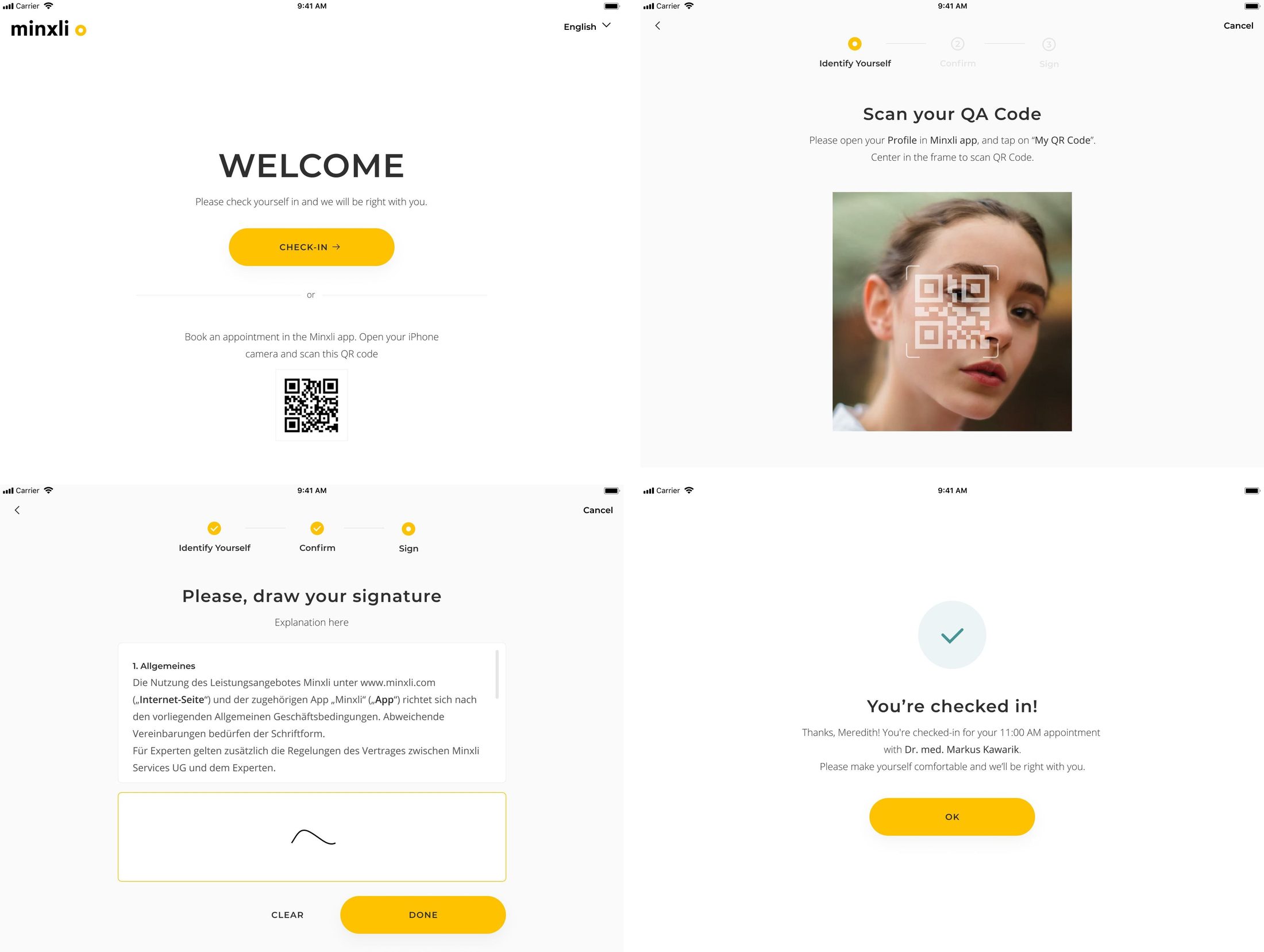
Online-to-offline healthcare platform — responsive website, self-check-in iOS app, and doctor/patient portals
5
digital products launched on time
+30%
onboarding efficiency
Top 50
“Digital Top 50” awards finalist
2
strategic partnerships secured

Overview

One network — from app to clinic.

Minxli (Munich, Germany) set out to build a working ecosystem for doctors that responds to their needs — and to the demands and preferences of today’s patients. Its uniqueness is the ability to seamlessly offer online-to-offline services: doctors and patients are connected in one network via mobile app (iOS, Android), website, or physically in the clinic.

I joined as the product designer for the whole ecosystem — working alongside the CEO, medical advisors, two project managers, a product owner, four developers, and QA. From June to November 2019 we took the platform from an existing iOS app to a full family of digital products and a refreshed brand.

Challenge

Five products. One immovable deadline.

The first Minxli clinic was opening in October 2019 — and every digital product had to be ready for day one: a new website, an improved iOS and Android app, and a brand-new self check-in app for the clinic itself.

That meant compressing research, workshops, definition, prototyping, visual design, and delivery across three platforms into a few months — while navigating German healthcare law, insurance payment models, and the expectations of both doctors and patients. And we did it.

My role

Product / UX / UI Designer.

Sole designer on a dream team: CEO, medical advisors, 2 project managers, 1 product owner, 4 developers, and QA.

  • Research & audit — analyzed the existing iOS app and researched healthcare market trends and patterns.
  • Workshop facilitation — led a 3-day on-site workshop in Munich: Business Model Canvas, Speed Boat, Empathy Maps, and As-is Scenario Mapping.
  • Define — personas for both user roles and Customer Journey Maps that anchored every product decision.
  • Flows & wireframes — user flows and wireframes across web, mobile, and tablet, working closely with copywriters.
  • Visual design & design system — a new brand style, moodboards, typography, and a design system spanning all five products.

Process · Research

Three days in Munich that shaped everything.

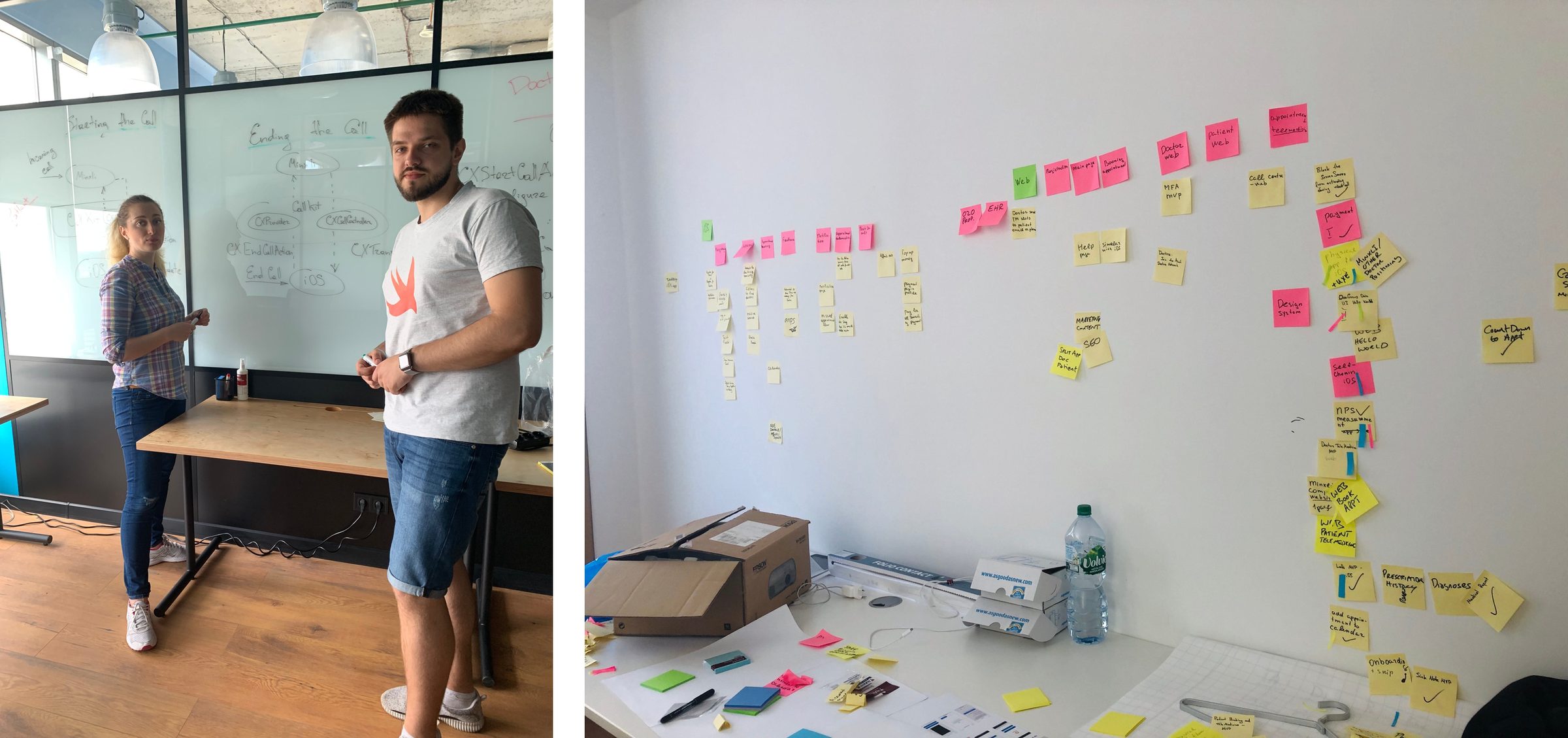
After auditing the existing app and researching the most popular healthcare products and patterns, I facilitated a 3-day workshop with the whole team. We used the Business Model Canvas to align on the product, Speed Boat to surface what holds the service back, and Empathy Maps to visualize what we knew about users. Talks with doctors and medical advisors surfaced pain points — and the details of German healthcare law that proved critical to the product.

Workshop in Munich: facilitating at a whiteboard and a wall covered in sticky notes from the mapping sessions
Workshop, Munich — Business Model Canvas, Speed Boat, and Empathy Mapping with the CEO, medical advisors, and the product team.
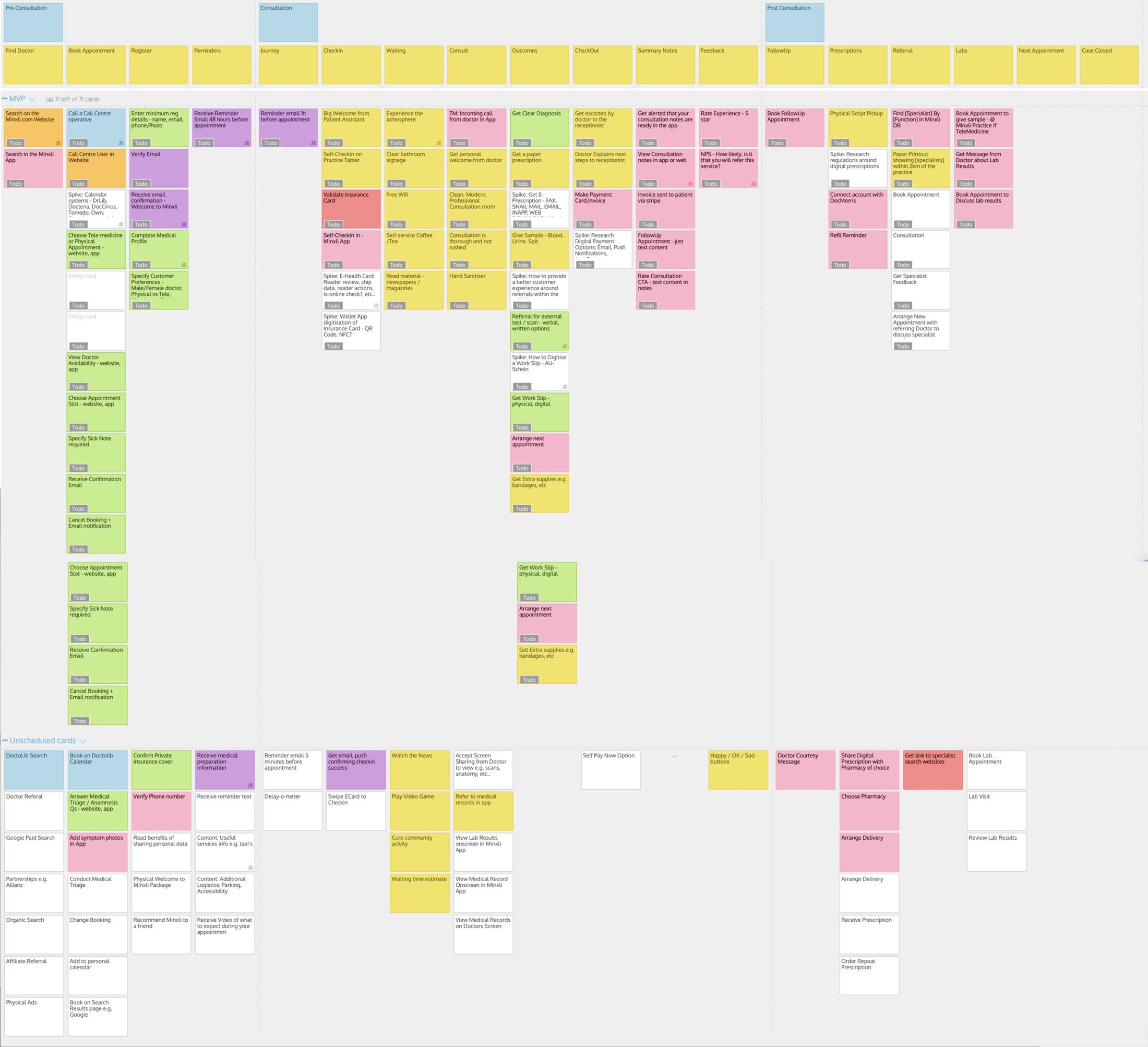
As-is scenario map: a large story-mapping board tracing pre-consultation, consultation, and post-consultation steps with prioritized cards
As-is Scenario Mapping — we traced how users accomplish tasks today, captured where they experience pain, then voted and prioritized the MVP.

Process · Define

Two roles, three personas, one shared language.

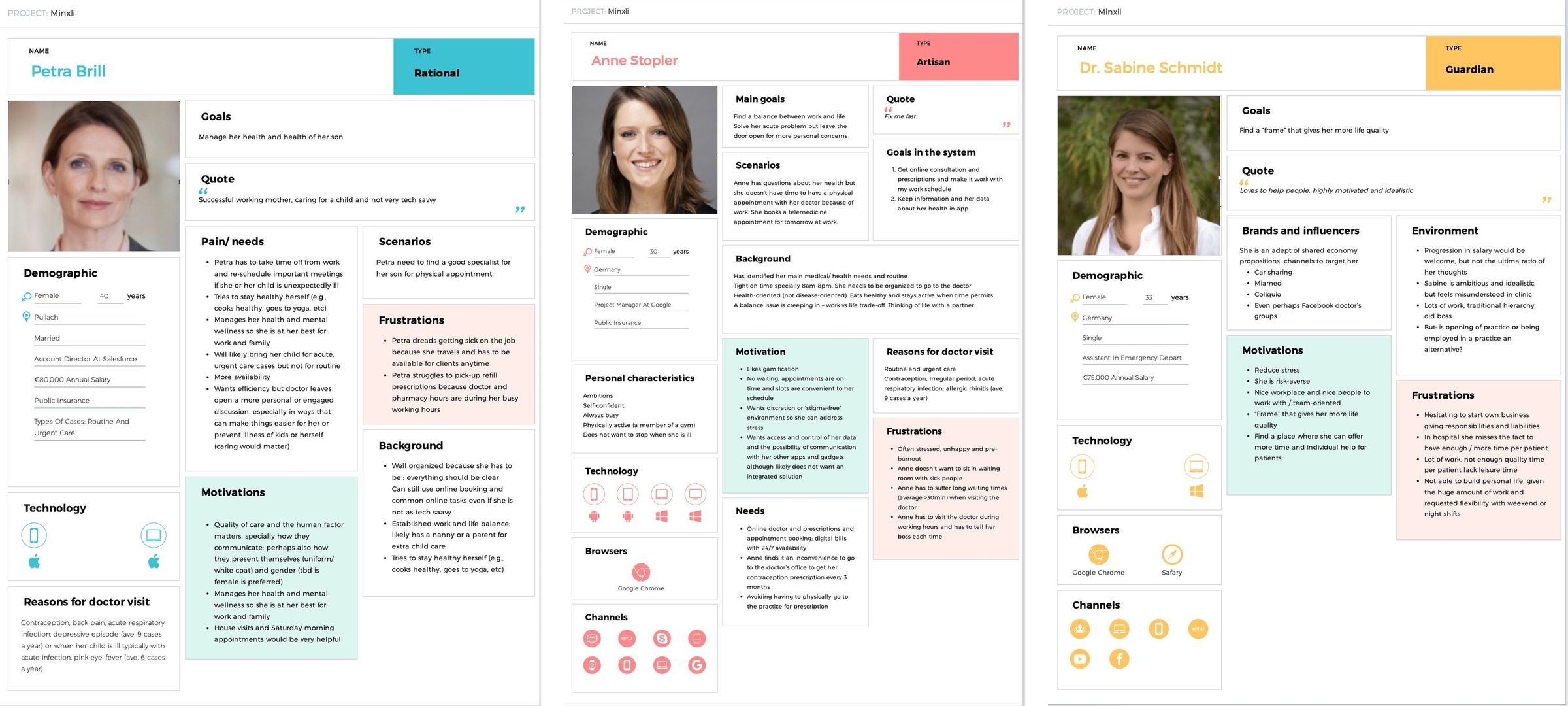
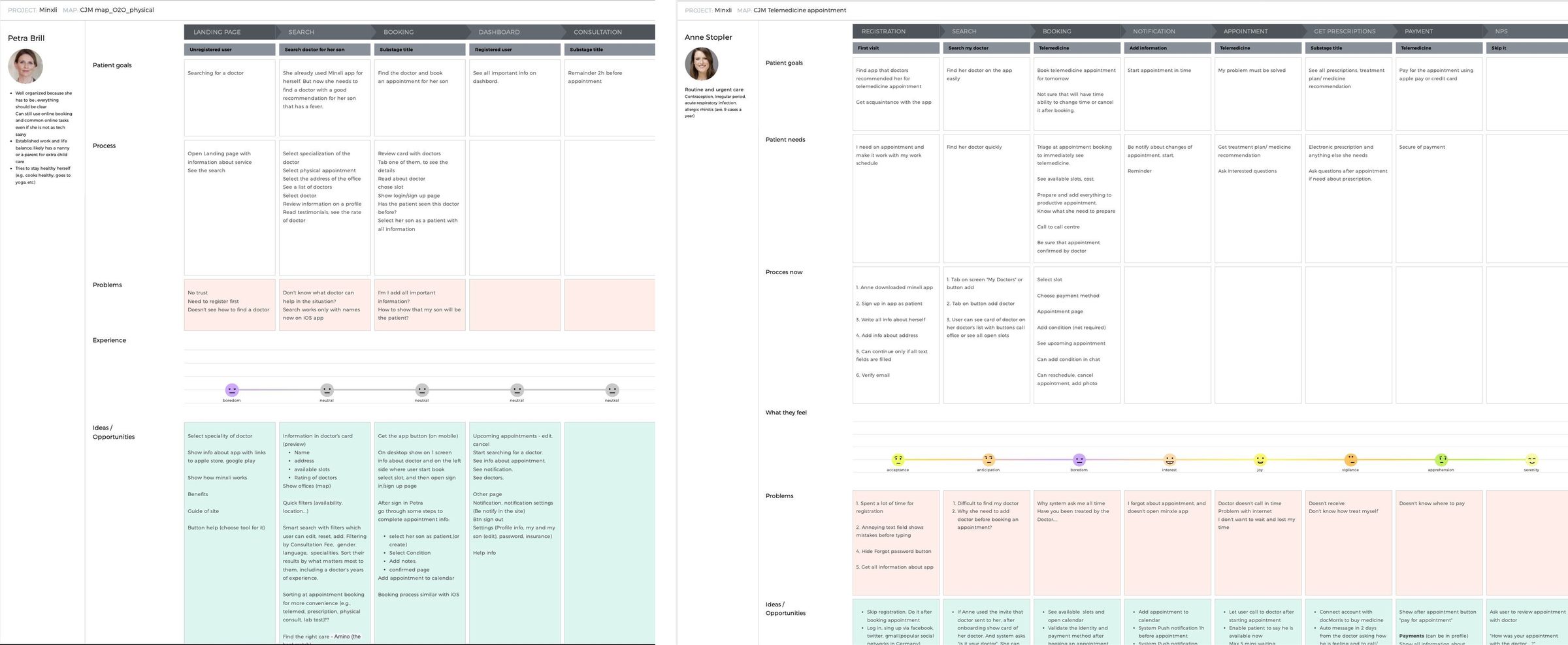
Talks with patients, doctors, and the workshop findings defined two key roles: Doctor and Patient. Petra Brill and Anne Stopler represent patients; Dr. Sabine Schmidt represents doctors. The whole team used them in every discussion — and Customer Journey Maps connected their goals and frustrations to concrete product moments.

Three persona sheets: patients Petra Brill and Anne Stopler, and doctor Dr. Sabine Schmidt, with goals, frustrations, and motivations
Personas — Petra Brill and Anne Stopler (patients), Dr. Sabine Schmidt (doctor). Goals, pains, motivations, and reasons for a doctor visit.
Two customer journey maps tracing patient and doctor experiences across stages, actions, feelings, and opportunities
Customer Journey Maps — mapping each persona’s journey from finding a doctor to follow-up care.

Process · Ideate & prototype

From flows to wireframes — fast, on purpose.

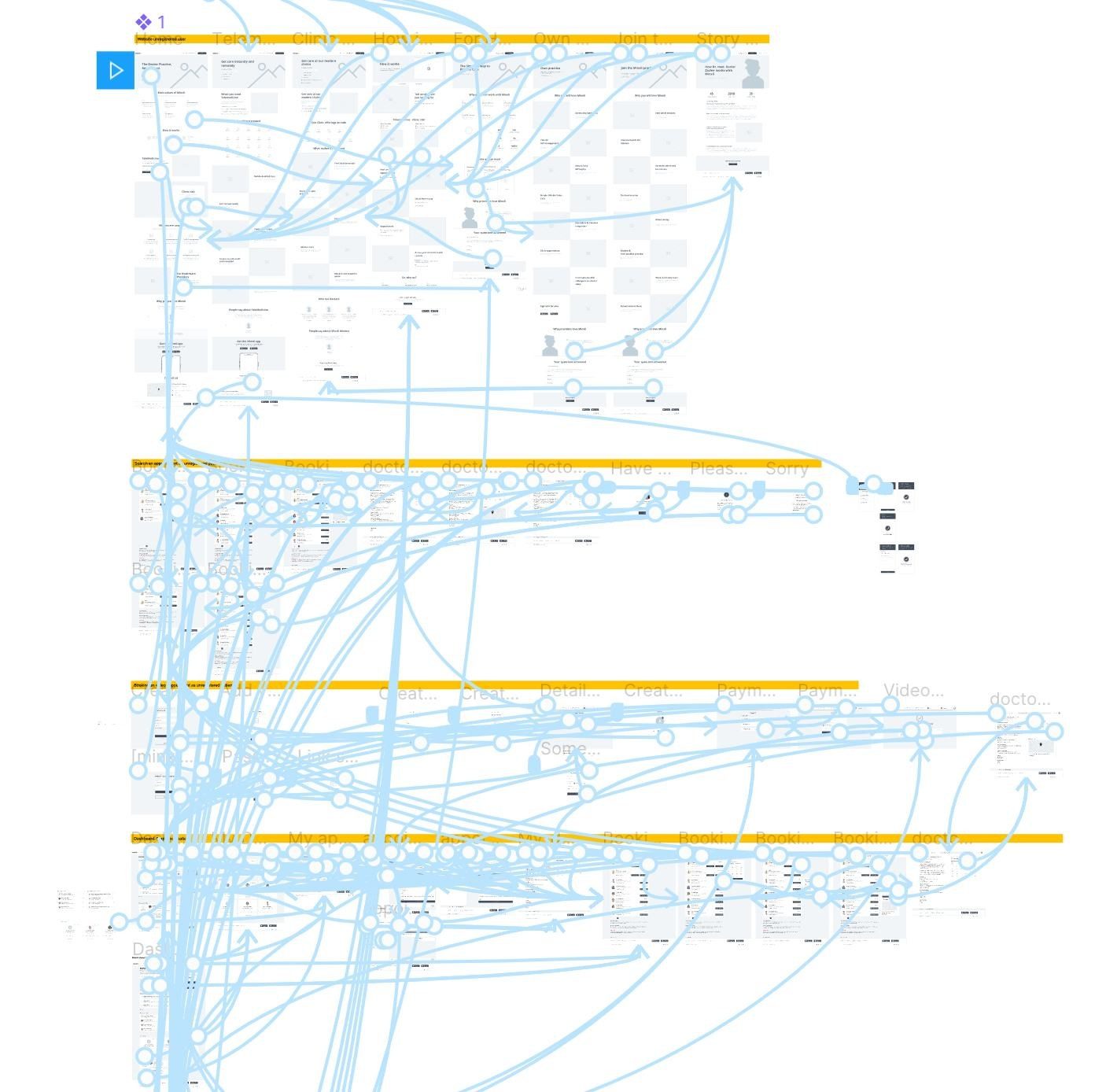
User flows simplified early planning: how many screens we needed, in what order, and which components had to exist. Then we walked our personas through every wireframe with the team — discussing functionality, features, and flows, with copywriters involved early. Wireframes saved precious time on changes before visual design began.

Detailed flowchart of user flows across the booking, consultation, and check-in journeys
User flows — determining screens, order, and components before a single pixel of UI.
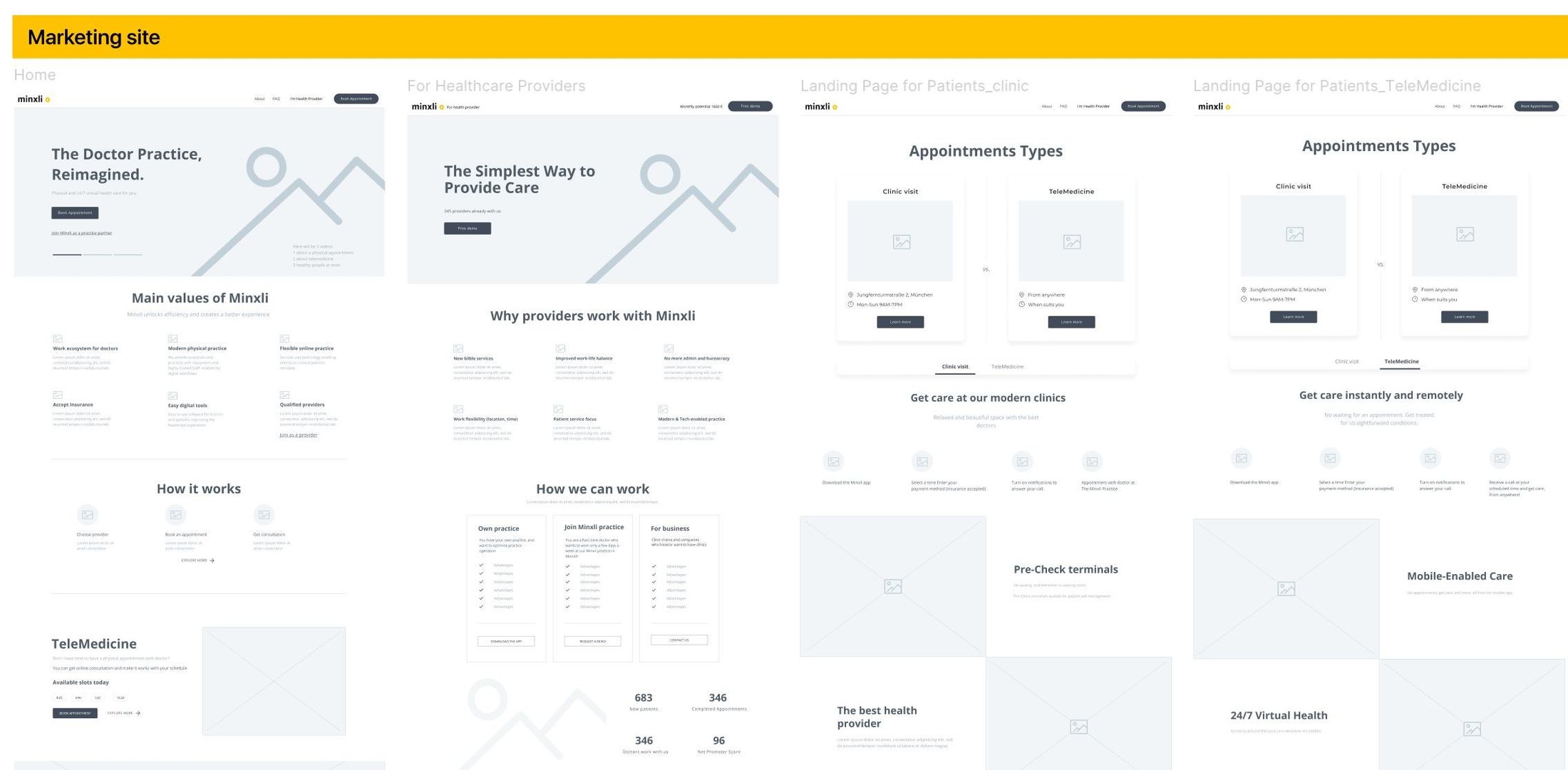
Wireframes of the marketing site: home, healthcare provider pages, and patient landing pages for clinic and telemedicine
Wireframes — the marketing site for patients and doctors, tested with personas before moving to visual style (Montserrat & Open Sans, a warm yellow-led palette).

The products

One ecosystem, five launches.

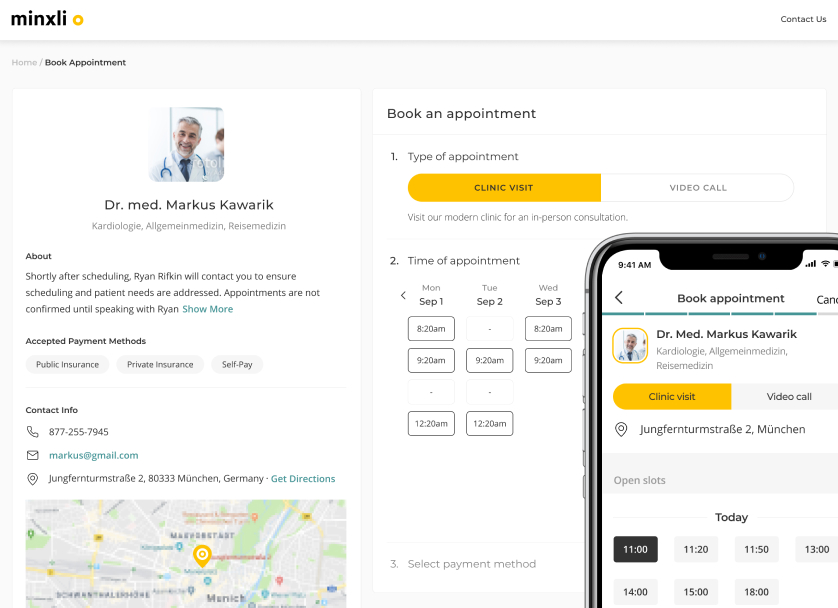
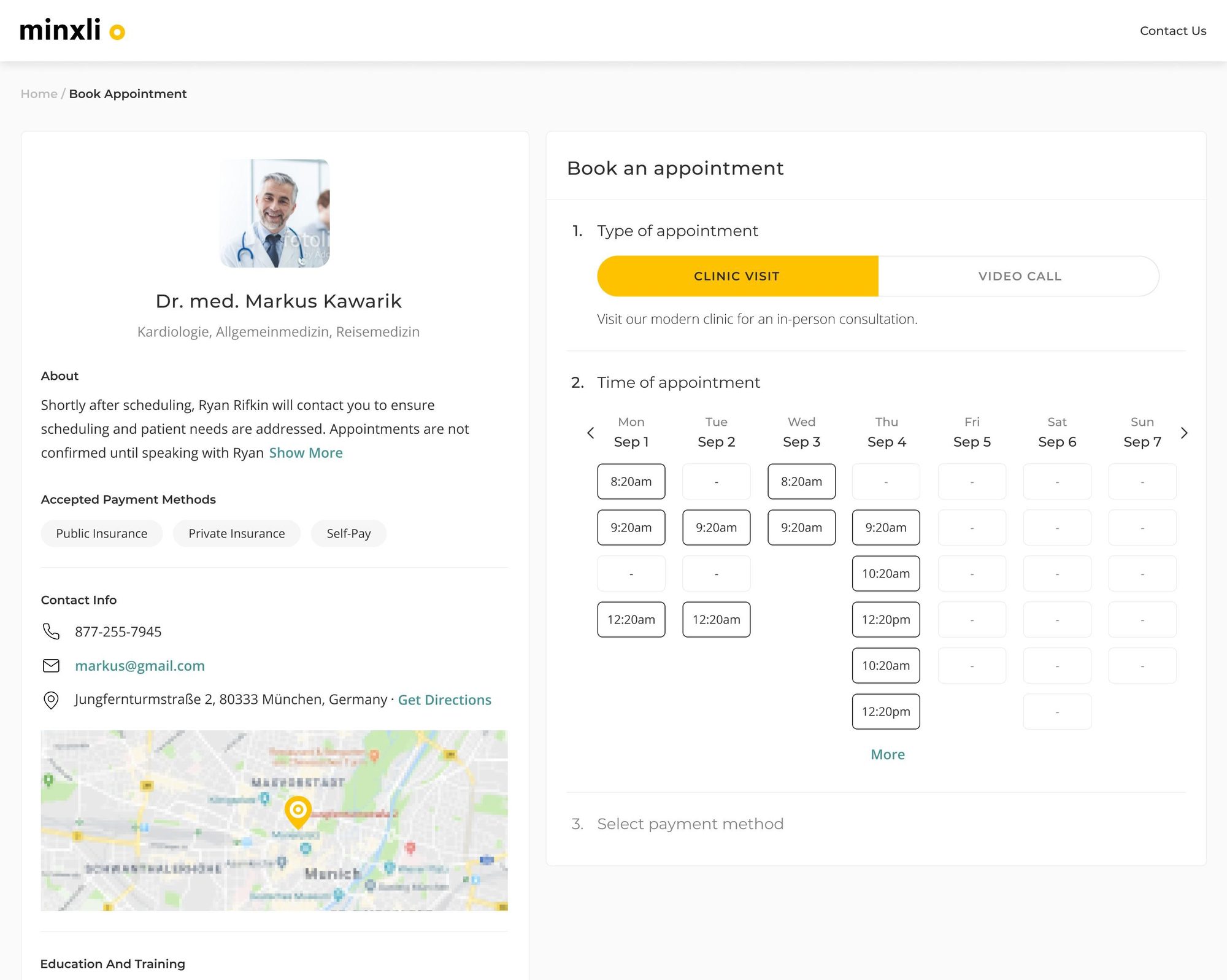
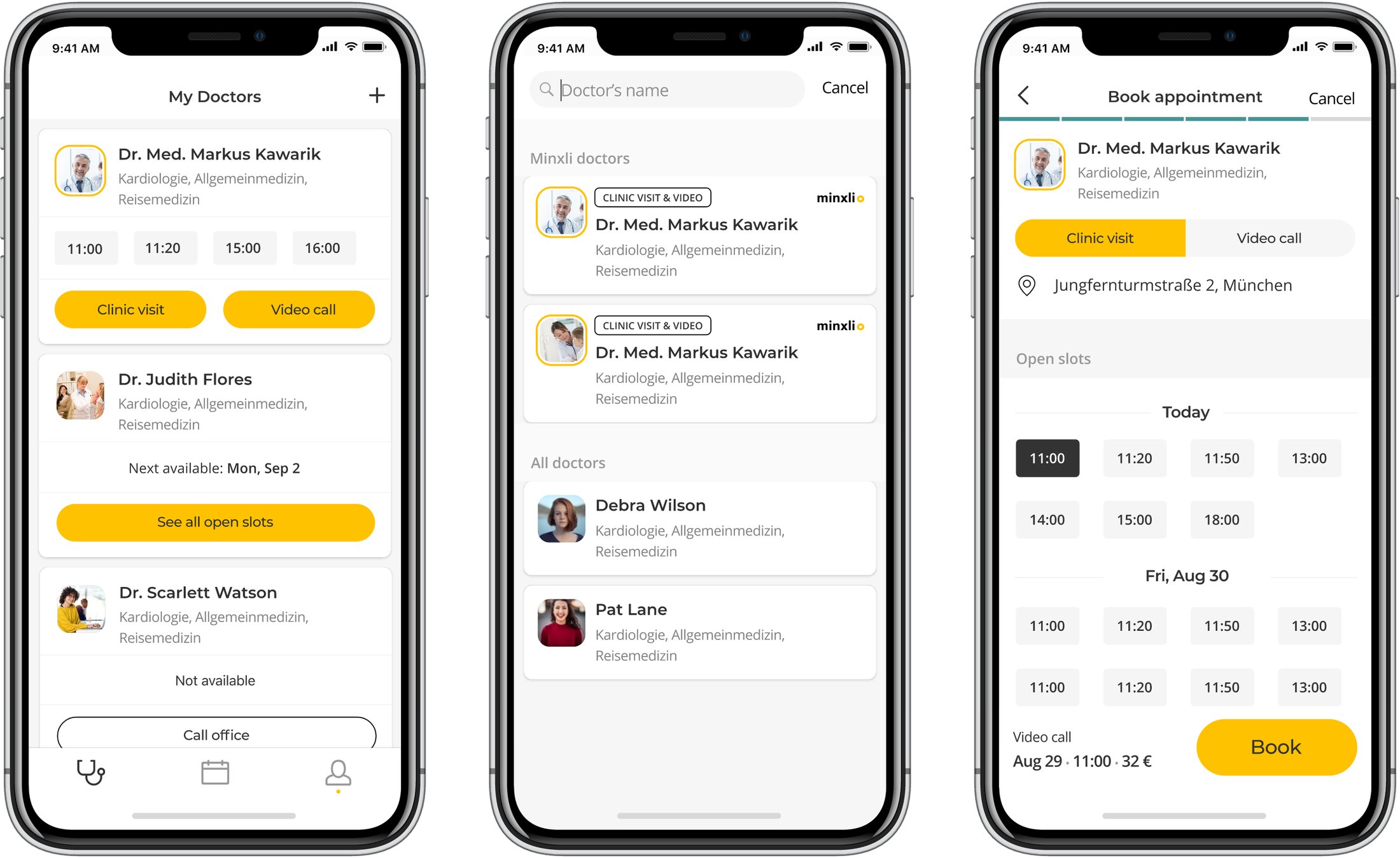
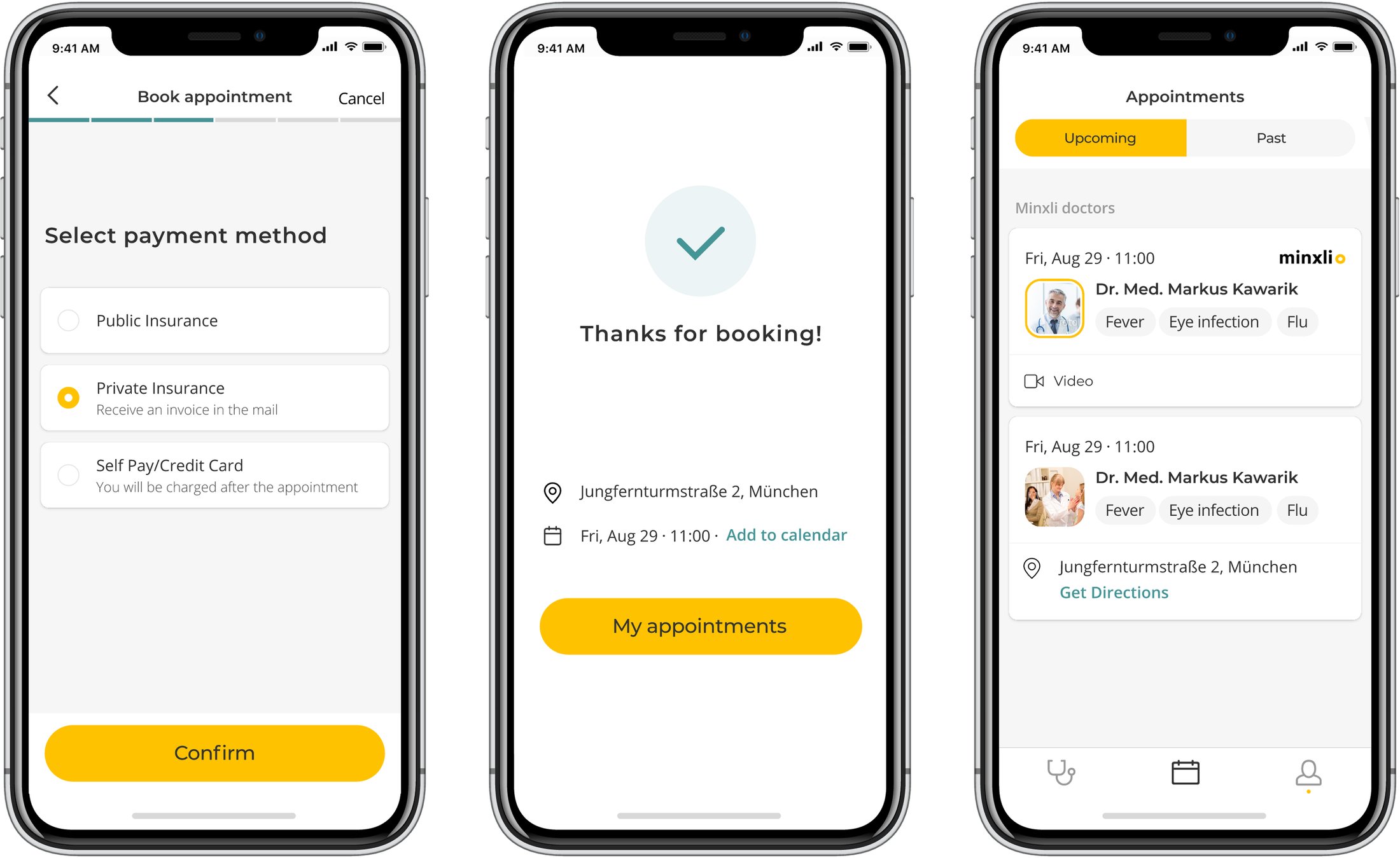
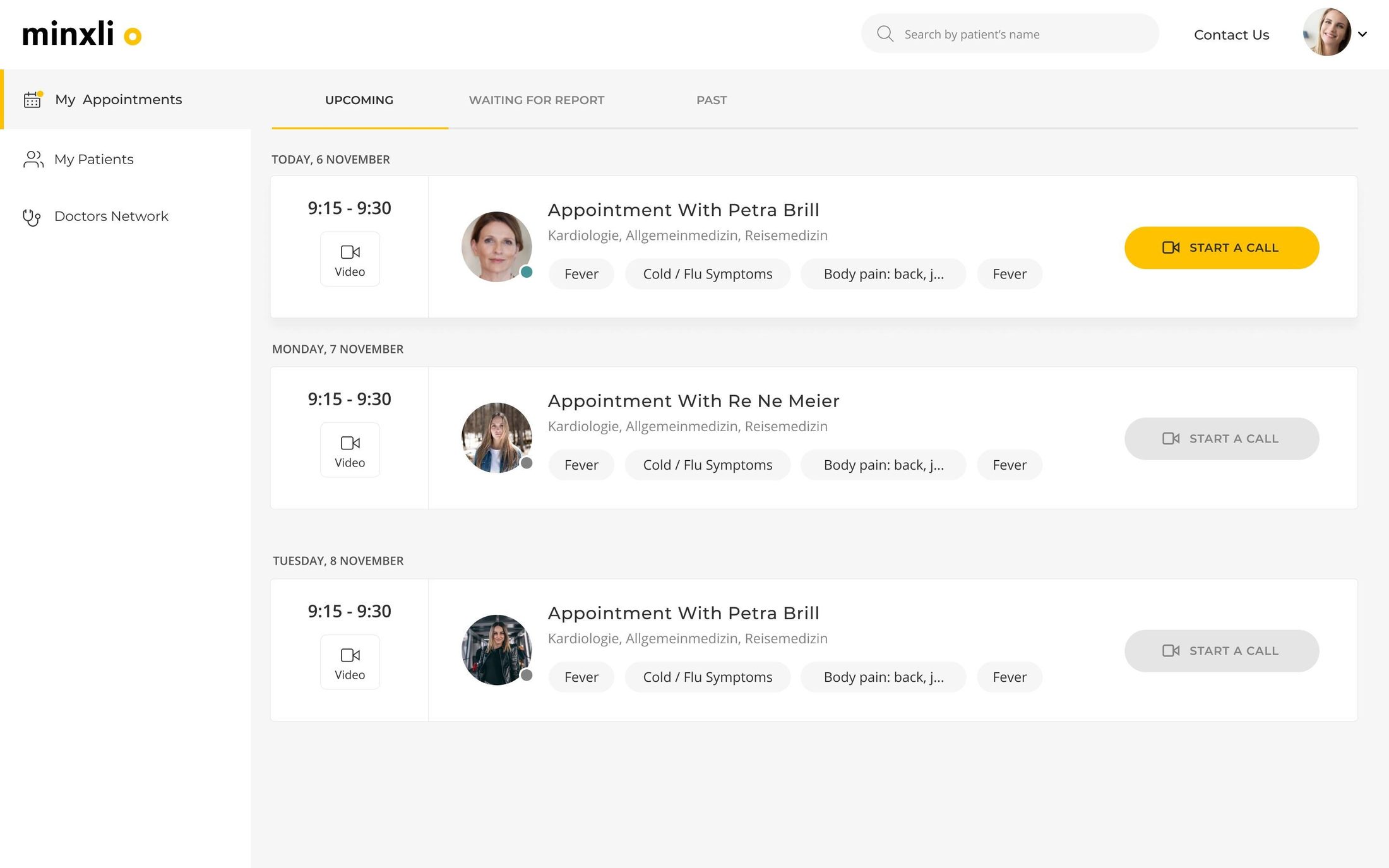
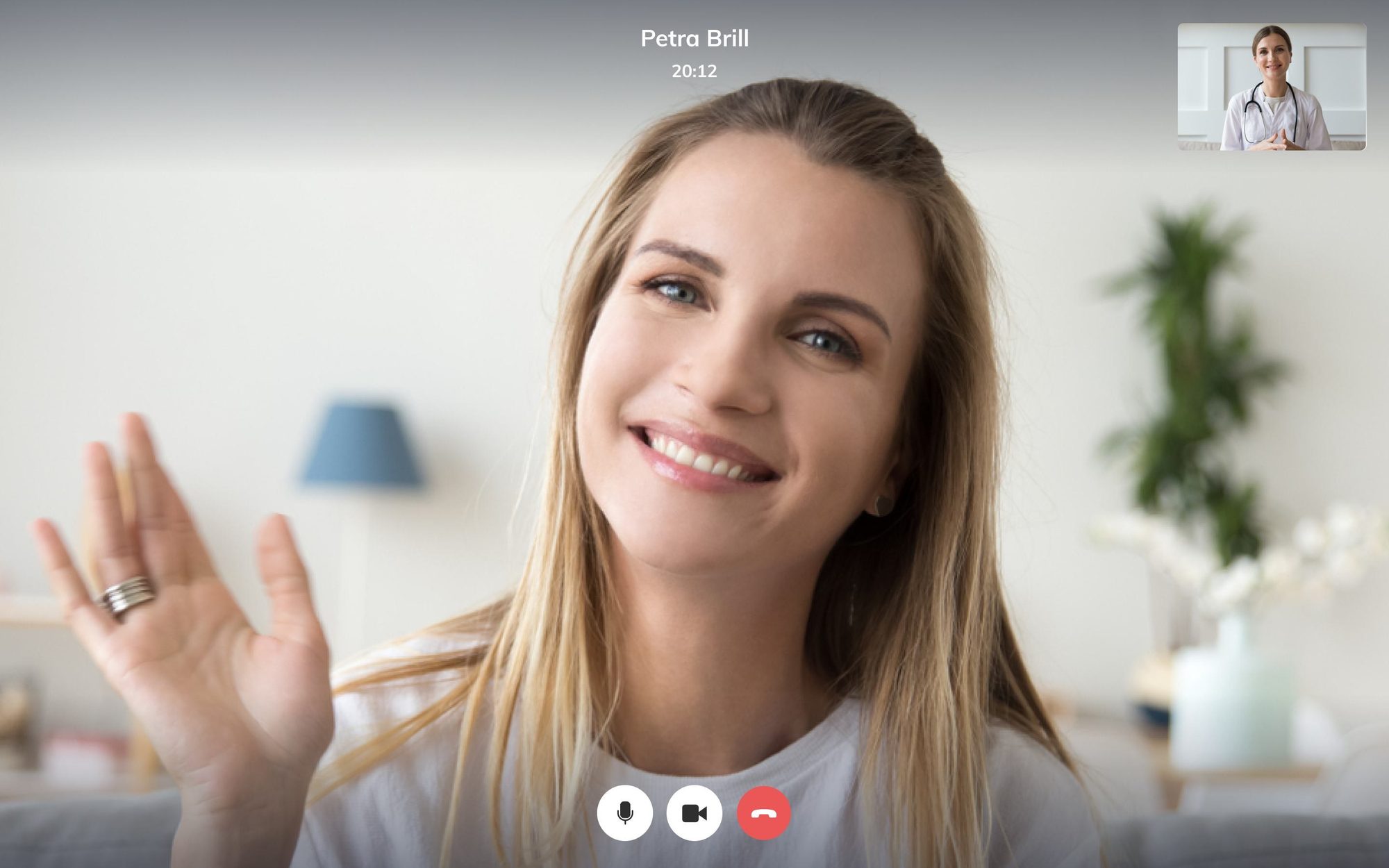
Everything shipped for the clinic opening: a responsive marketing website, web booking, a rebuilt mobile booking and payment flow, admin panels for doctors and patients, online video consultations, and a self check-in tablet app for the clinic.

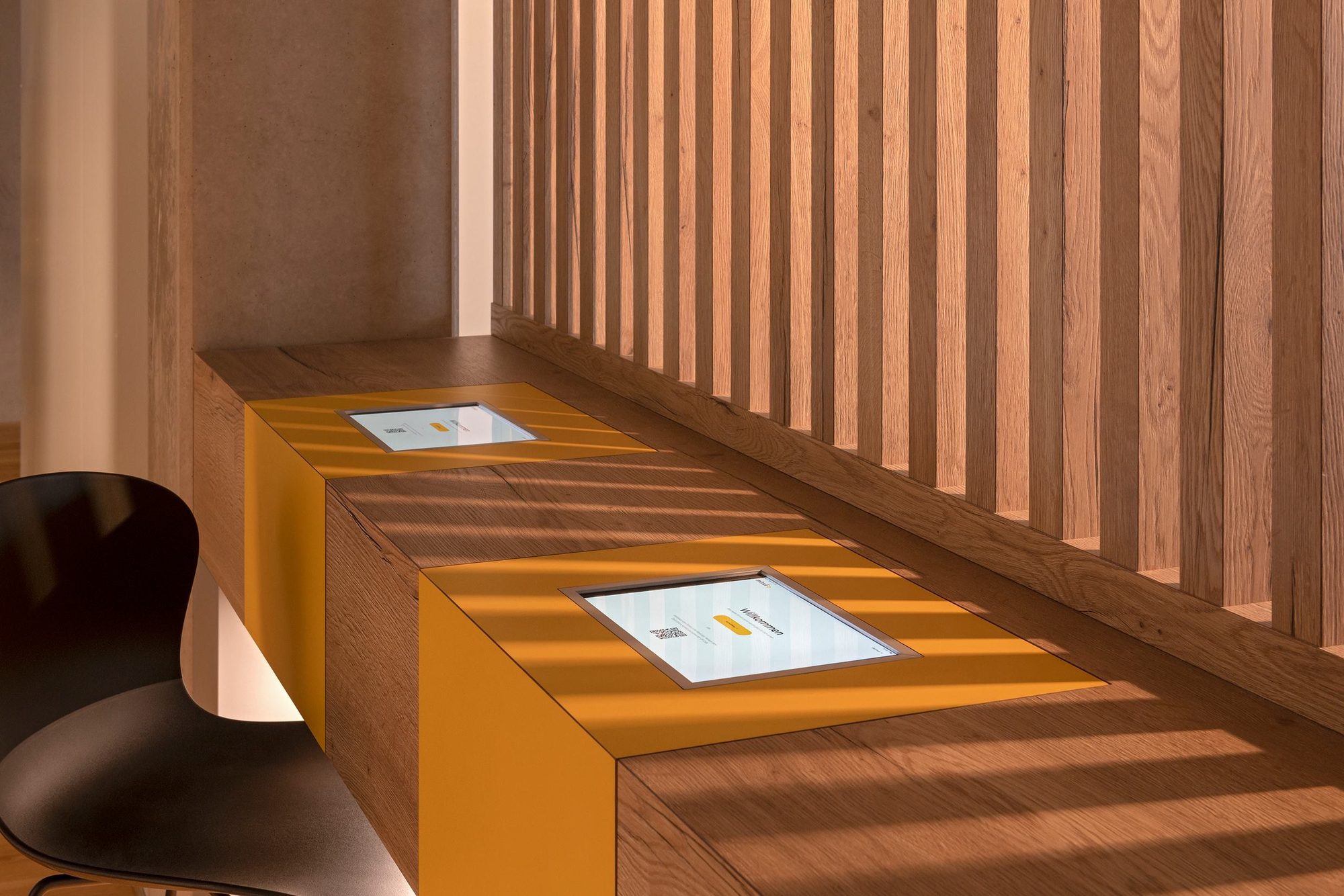
The self check-in tablet mounted in the warm wooden interior of the first Minxli clinic
Live in the wild — the self check-in terminal in the first Minxli clinic, Munich.

Outcome & impact

Ready on opening day.

Launched on time

Website, improved iOS & Android app, and the self check-in app — all live for the October 2019 clinic opening.

Strategic partnerships

Partnership with the largest payor and the Federation of Students.

Digital Top 50 finalist

Minxli was one of 50 finalists of that year’s “Digital Top 50” awards.

A brand & design system

A new brand style and a design system that kept five products consistent across web, mobile, and tablet.

Next case study

Eurosender — Digital Logistics Platform — from aggregator to self-service.

Read it

© 2026 Oksana Korol