Case study · Minxli × docdirekt
Docdirekt — White-Label Telemedicine App
Docdirekt is the telemedicine service of KVBW — the Association of Statutory Health Insurance Physicians of Baden-Württemberg. Minxli provided the secure, encrypted video and chat environment behind it, handling all digital doctor-patient communication as a white-label platform. Working at Minxli, I designed the mobile app for iOS and Android — one app covering both personas of the service: the patient flow and the doctor flow.
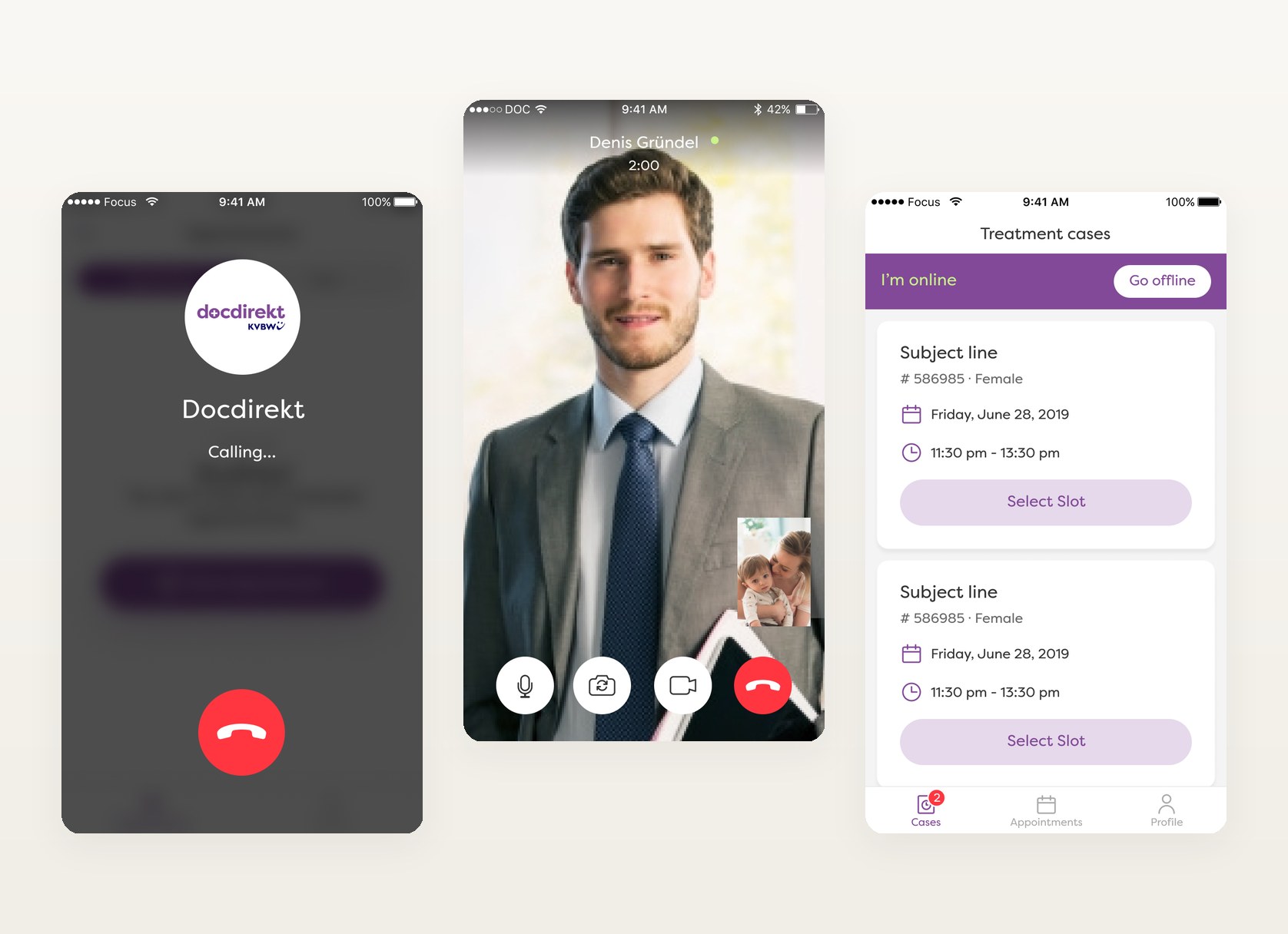
Overview
One platform, another brand.
Docdirekt lets publicly insured patients in Baden-Württemberg reach a doctor remotely: a patient contacts the service, a medical assistant (MFA) triages the case, and a doctor takes over — by chat, phone, or an encrypted video call. At the end, the patient receives a written report with the diagnosis and recommendations.
Under the hood it runs on Minxli's secure, encrypted video and chat environment — the same platform behind Minxli's own products, re-skinned and adapted as a white-label solution for KVBW. My job was to design the docdirekt mobile experience for both user roles without forking the platform: same components, same logic, a different brand.
Challenge
Two roles, one care journey.
The patient and the doctor experience the same consultation from opposite ends — and both personas had to be designed in sync, inside one app. A patient books and waits; a doctor manages a queue of incoming treatment cases and decides when to go online. A patient joins a call; a doctor starts it, ends it, and writes the report the patient then receives.
On top of that came the white-label constraints: docdirekt's brand and KVBW's public-healthcare context had to fit onto Minxli's existing component system, so the dev team could ship the app on both iOS and Android from one design.
My role
Product / UX / UI Designer.
Designer on the Minxli team, working with docdirekt stakeholders, a product owner, and the developers building the iOS and Android apps.
- Stakeholder workshop — facilitated a requirements workshop with docdirekt stakeholders to map the service flow, the two user roles, and the constraints of a public-healthcare product.
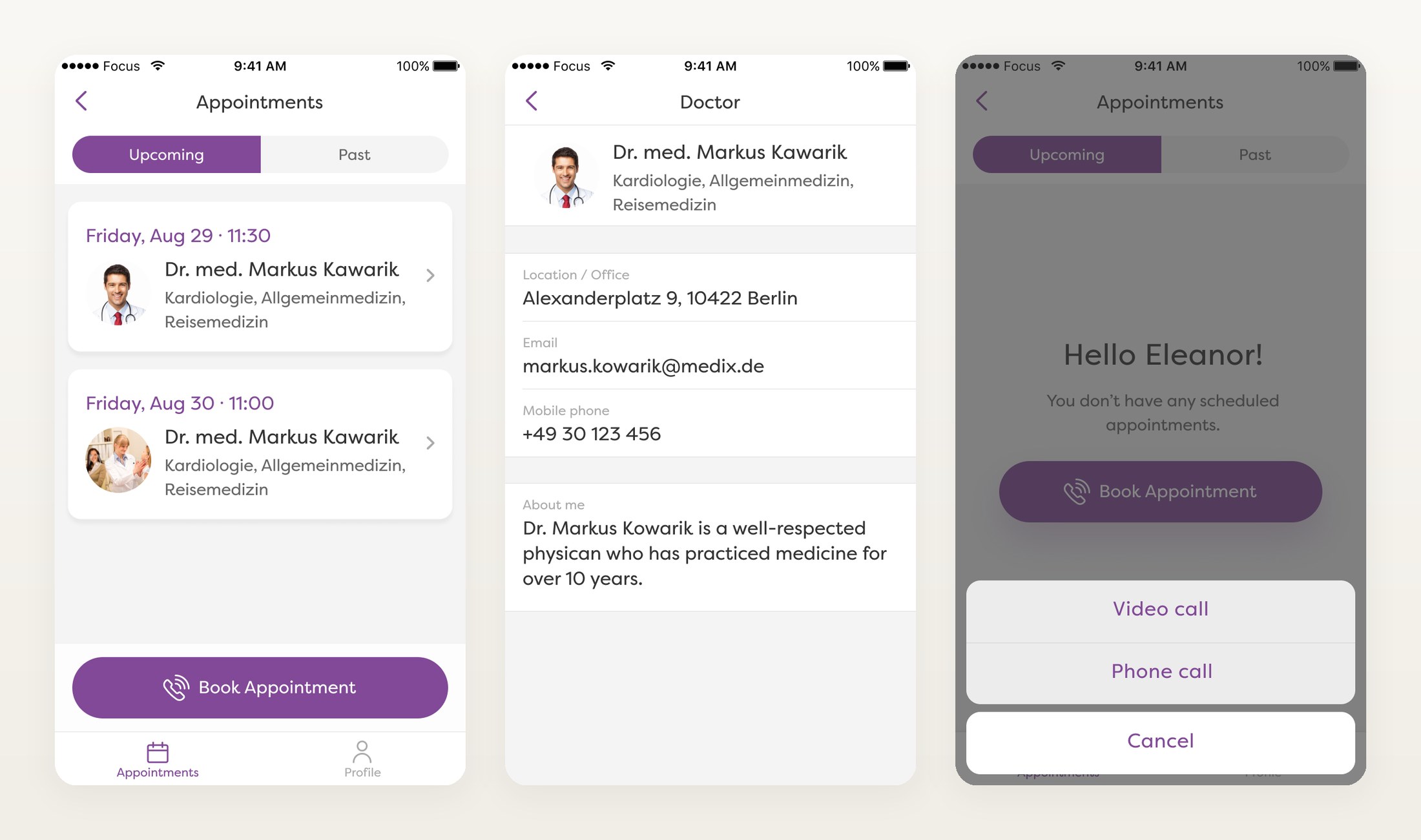
- Patient flow — designed the patient journey: booking an appointment, choosing between video and phone call, chatting with the doctor, sharing documents, and receiving the report.
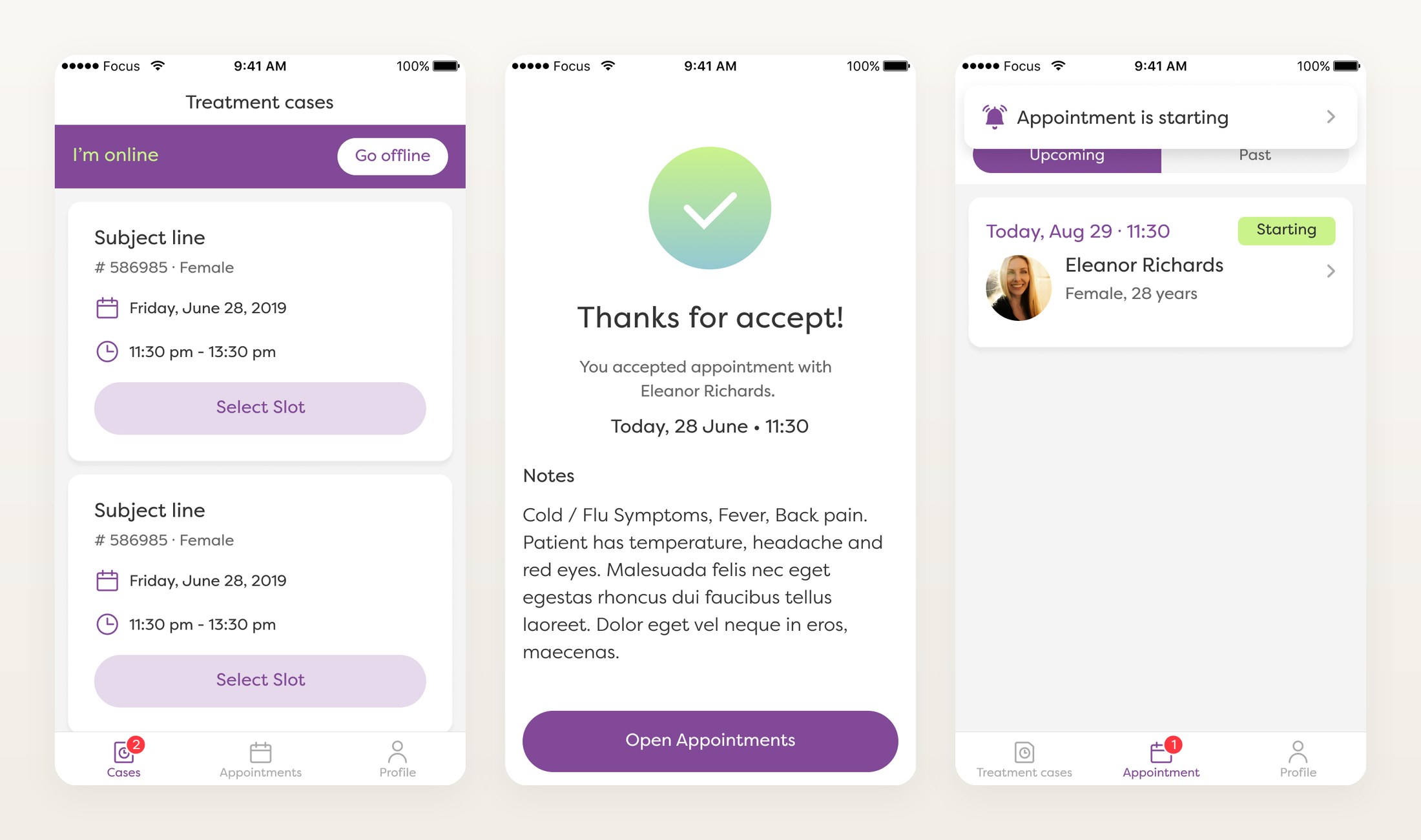
- Doctor flow — designed the doctor journey: managing availability, picking up treatment cases, calling patients, running video consultations, and writing reports.
- Close work with the dev team — collaborated closely with developers throughout implementation, keeping the white-label components consistent across iOS and Android.
The product · Patient flow
From “I need a doctor” to a written report.
Patients book an appointment, pick how they want to talk — video or phone call — and meet their doctor without visiting a practice. The consultation lives in a chat thread: files and photos can be shared before the call, the encrypted video call happens right in the app, and the doctor's report with the diagnosis arrives in the same thread when the case is closed.
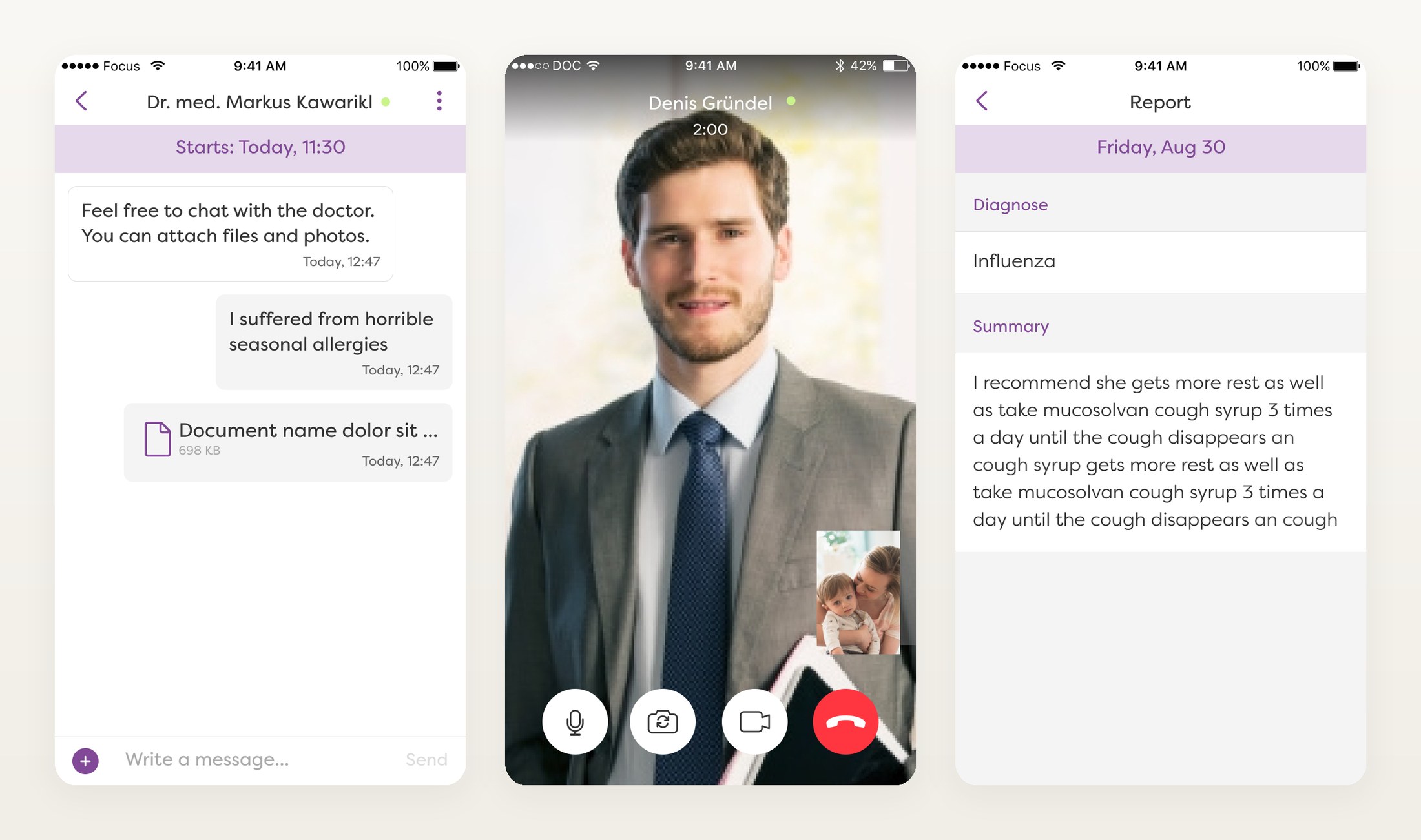
The product · Doctor flow
A queue, a call, a report.
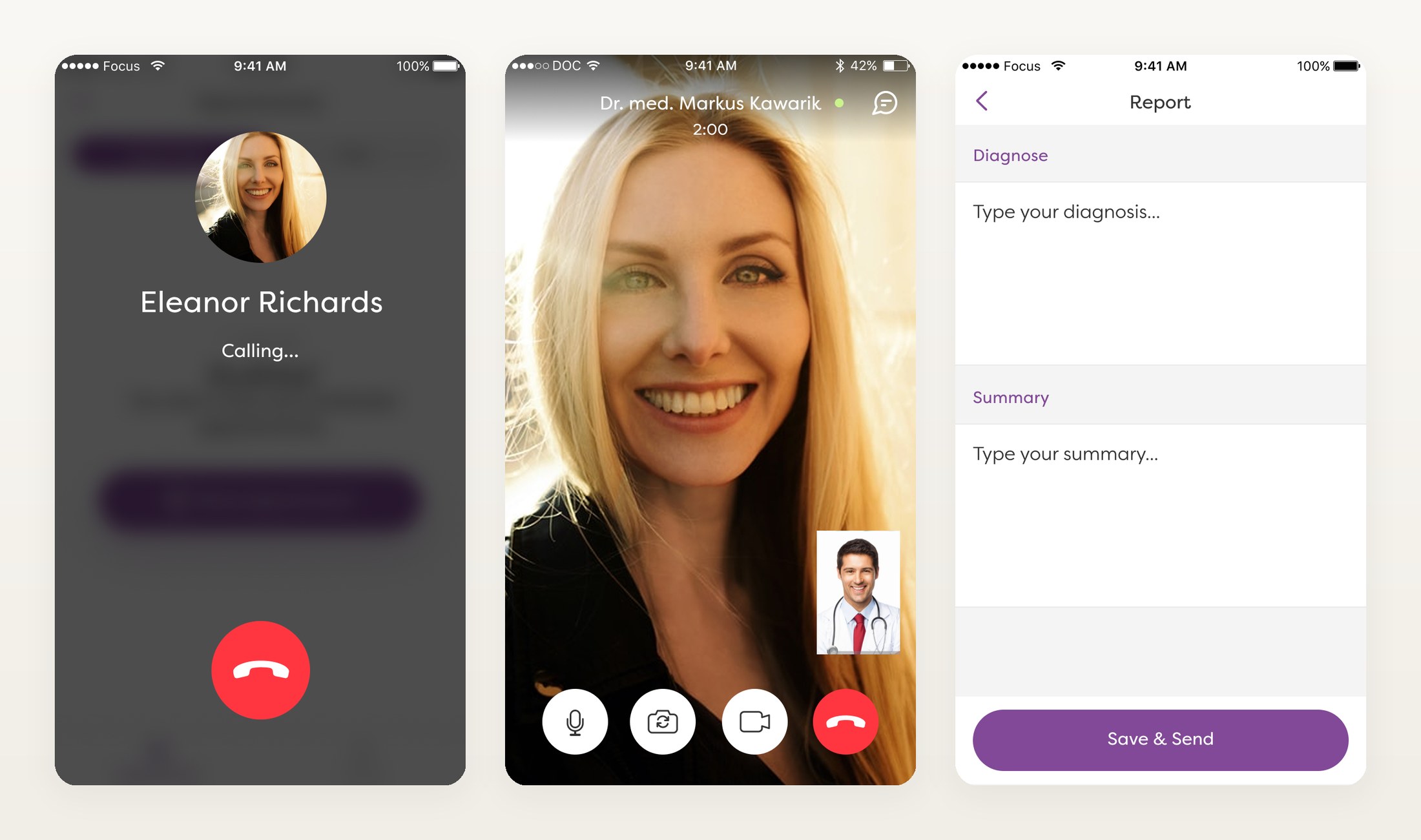
Doctors work docdirekt like a shift: they go online, see the queue of incoming treatment cases, and pick up the ones they can take. Accepting a case books the slot; when the appointment starts, the doctor calls the patient, runs the encrypted video consultation, and closes the case by writing the diagnosis and summary — the report the patient receives on the other side.
Outcome
A public telemedicine service, shipped white-label.
Both personas designed in sync
One app covering the full care journey for patients and doctors — booking, triage, encrypted consultation, and the written report.
Requirements aligned early
The stakeholder workshop turned a public-healthcare brief into a concrete service flow both teams could build against.
White-label capability proven
Docdirekt showed Minxli's platform could carry another brand end to end — components, flows, and encrypted infrastructure reused, not rebuilt.
Designed with the dev team
Close collaboration through implementation kept the app consistent across iOS and Android.